Knee Stability: The Cross Brace ACL Protocol
Revolutionising Knee Stability: The Cross Brace ACL Protocol The anterior cruciate ligament (ACL) is a crucial structure in the knee joint, playing a pivotal role in maintaining stability and preventing excessive movements. Unfortunately, ACL injuries are common, especially among athletes engaging i
Revolutionising Knee Stability: The Cross Brace ACL Protocol
The anterior cruciate ligament (ACL) is a crucial structure in the knee joint, playing a pivotal role in maintaining stability and preventing excessive movements. Unfortunately, ACL injuries are common, especially among athletes engaging in sports that involve sudden stops, changes in direction, and jumping. The recovery from an ACL injury often involves surgical intervention and a comprehensive rehabilitation protocol. One innovative approach gaining traction in the realm of ACL rehabilitation is the Cross Brace ACL Protocol.
Understanding the Cross Brace ACL Protocol:
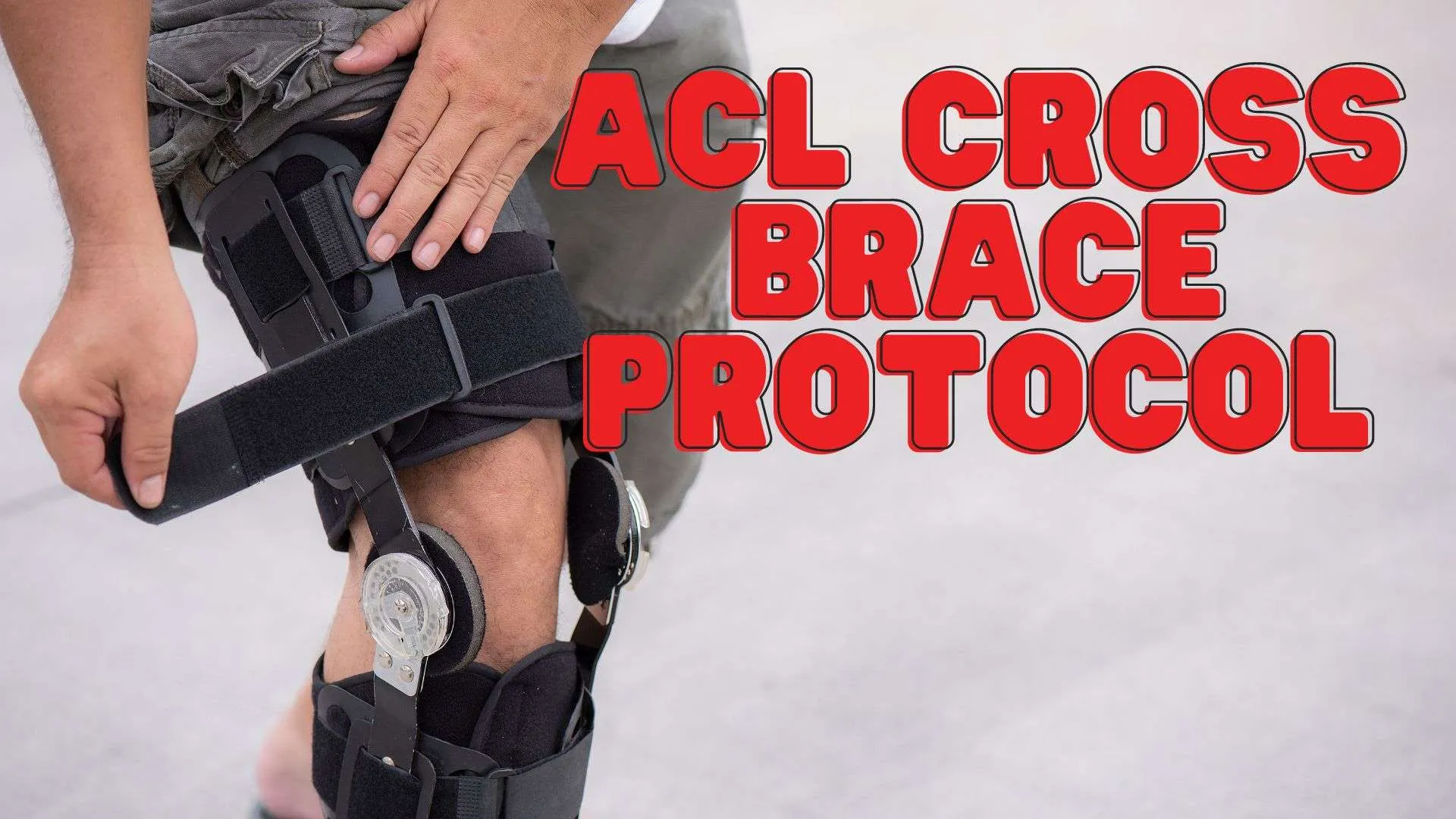
The Cross Brace ACL Protocol was developed by Drs Merv and Tom Cross and their multidisciplinary team to manage acute ACL tears non-operatively. For a long time now it was believed that the ACL was a ligament that did not heal well and that surgical reconstruction of the ACL was the really the only option available to return to activity. However, over the last few years there is more and more evidence showing that the ACL can actually heal, if given enough time and placed in the appropriate position. This is where the brace comes in. A brace is fitted to the knee and locked at 90° knee flexion for 4 weeks, and is then gradually unlocked over the next four plus weeks. In this position the ends of the torn ACL are as close as they can be, which gives it the best chance to heal heal.
The standard bracing protocol is 3 months long, after which an MRI is repeated to determine if healing has occurred. If so then they continue with their rehabilitation which looks like any normal ACL rehabilitation program, with the same return to sport time frames and goals, usually about 12 months. So far, the success rate of healing ACLs are quite good, with many people showing good healing and returning to their previous sport.
Key Components of the Cross Brace ACL Protocol:
- Diagnosis of an ACL injury is made by the Specialist and Radiologist
- Not everyone who has an ACL injury will be a good candidate. Can depend on other injuries at the same time, how long it has been there, how big the injury was etc.
- Only works if start it within 20 days of injury (ideally <7)
- It does involve modifying activity for at least 4 weeks – using crutches, not straightening the leg – so need to make sure you are able to do this
- There are modified versions of the protocol the specialist can discuss with you
*Early Post Injury Phase: *
- In the first four days the knee is braced from 90° to 30° to limit straightening the knee. It is not locked at this stage as to allow swelling to settle
- An MRI is obtained to determine the extent of the damage and to determine if the injured person will be a good candidate for the protocol
- Referral to a sports doctor – Dr Cross at the Stadium Clinic at Moore Park – to discuss the MRI, candidature and protocol. Additionally this is necessary to prescribe medications to prevent blood clots
- Brace is locked at 90 and protocol followed with guidance by the physiotherapist.
- Rehabilitation starts immediately – there is a surprisingly a lot you can do in a brace.
- At 3 months there is a repeat MRI to determine the extent of healing and the physiotherapist will put you through some tests to determine how the knee is progressing in regards to strength, range of motion and control.
*Mid to late stage phase *
- As the rehabilitation progresses, you move through the protocol with exercises focusing on regaining range of motion of the knee as well as the strength of the leg, with particular focus on the quadriceps.
- These exercises gradually increase in load and demand in order to help you return to your chosen sport / activity.
- During this stage the brace may be worn for a few specific activities until it is no longer needed
- This part of the journey is very similar to a ‘normal’ ACL rehabilitation protocol.
- At 3 months, you will undergo specific return to sport drills to ensure the knee will be able to tolerate a return to sport.
The Cross Brace ACL Protocol represents a promising advancement, offering a comprehensive and innovative approach to restoring knee stability. As research and technology continue to evolve, protocols like these provide hope for individuals recovering from ACL injuries. This can be empowering when returning to an active and fulfilling lifestyle with confidence in knee strength and stability.
If you have concerns or questions, give us a call to speak to one of our physiotherapists today.
Got a niggle you can't shake?
Our physios have been getting Penrith moving since 1989. No referral needed for private patients.